


Pipl VPN: рабочий впн
4.8596.00 Reviews
App Specs
- Version
- 2.0.1
- Updated On
- License
- Free
- Downloads
- 5,000,000+
- Developer
- PIPL NETWORK LLC
- Categories
- Tools
- Platform
- Android
Screenshots

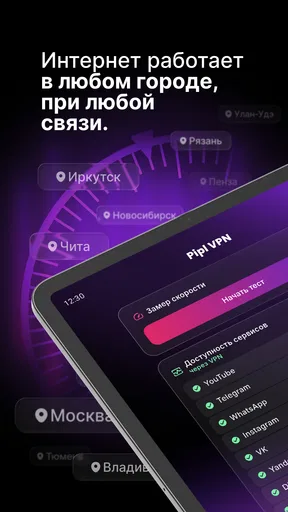

 Analysis by AppCompare
When I judge a VPN, I look beyond the promise of a private connection: I want to know what I can see, what choices I can make, and whether the app explains its limits clearly. Pipl VPN: рабочий впн is a free tools app from PIPL NETWORK LLC, and its simple pitch is appealing if you want a quick way to route your connection through a VPN. Its average rating is 4.7 from around 98,000 ratings, and it has over 5 million installs. Those figures suggest plenty of people have tried it, but popularity alone doesn’t tell me how a VPN handles sensitive traffic, so I would still approach it thoughtfully.
What a VPN can—and cannot—do for trust
A VPN changes the route your internet traffic takes and can help conceal your public IP address from websites you visit. It is useful, for example, when you want an added layer of privacy on public Wi-Fi or need to test how a site behaves from another network location. But a VPN is not a complete security system: it does not make every website trustworthy, prevent every scam, or guarantee anonymity. I wouldn’t treat any VPN as a substitute for strong passwords, two-factor authentication, and care with links or downloads.
That distinction matters with a lightweight, free VPN in particular. I’d start by checking what the app presents on the device before connecting: the permission prompt, any privacy information, and the choices shown in the interface. A VPN connection necessarily involves routing traffic through a service, so the provider becomes an important part of the trust decision. I would avoid assuming that a simple connect button, a high rating, or a privacy claim answers every question about data handling.
Why You Need Pipl VPN
Now, I know what you're thinking—"Another VPN app?" But hear me out. Pipl VPN isn't just any VPN; it's your ticket to a safer and more private internet experience. With just a few taps, you can mask your IP address, making it appear as though you're browsing from another country. This is especially handy when you're trying to access content that's geo-restricted.
What I love about this app is how straightforward it is. There's no need to be a tech guru to get it up and running. Simply install the app, click connect, and voilà—you're surfing the web anonymously. And let's be real, who doesn't want a little more privacy these days?
Features That Stand Out
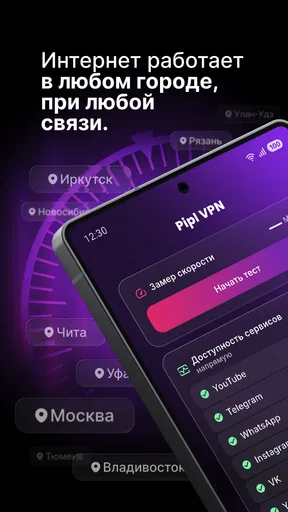
Alright, let’s dive into some of the features that make Pipl VPN stand out from the crowd. First off, the app offers a wide range of server locations. Whether you want to connect through the US, UK, or somewhere else, there’s likely a server for you. This is perfect for those times when you want to catch up on your favorite shows that are only available in other countries.
Another feature worth mentioning is the app's strong encryption protocol. This means that your data is kept safe from prying eyes, whether you're browsing from a café or your own home. Plus, it helps you dodge those pesky ads that seem to know a little too much about you.
Worth Reading Before You Choose

EA SPORTS FC Mobile 26 Is a Bigger Football Game, but It Takes Time

Flipboard Shows What News Apps Must Do Beyond the Feed

Switching to Android Auto Means Rethinking Your Driving Routine

Google Calendar Makes a Crowded Week Easier to Manage

Ludo King Makes the Most of the Minutes Between Plans

Baby Panda World Brings Quick Play to Modern Phones, but Its Game Library Feels Busy
And the best part? You don't need to worry about a drop in speed. Often, VPNs can slow down your connection, but Pipl VPN keeps things zipping along smoothly, allowing you to stream, browse, and download without any hiccups.
Choosing when to connect
For everyday use, I’d treat the connection as a tool to switch on for a specific reason rather than leaving it running automatically without thinking. Imagine checking email on a café’s Wi-Fi before heading to a meeting: I’d connect first, confirm the VPN is active, then avoid opening sensitive accounts if the connection is unstable or behaving oddly. When I get back to a trusted home network, I’d decide whether the extra routing is still useful or whether I’d rather use the direct connection for speed and fewer interruptions.
That small habit also helps with troubleshooting. If a banking app, work login, or streaming service suddenly refuses to load, I’d disconnect the VPN briefly and try again, then reconnect afterward if privacy is the priority. Some services restrict VPN traffic, and a different apparent location can trigger extra verification. This isn’t necessarily a fault in the VPN; it’s a trade-off that comes with changing your network route.
Location choice is worth approaching practically, too. For ordinary browsing, I’d pick a nearby option when available, since a shorter route often makes more sense than choosing a distant country for no particular reason. If a page is region-specific, choosing a relevant location may help, but access is never guaranteed: websites and streaming services can detect or block VPN connections, and their catalogues may change independently of the VPN.
Using the App: A Breeze
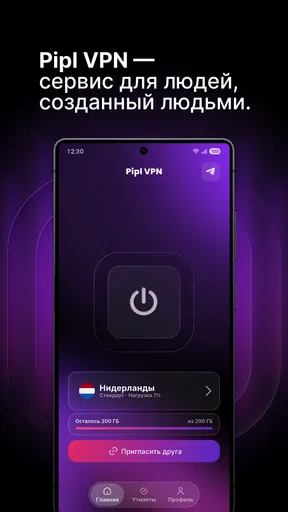
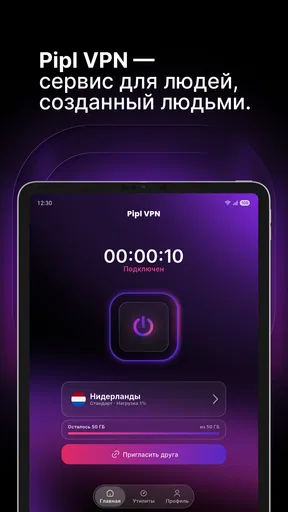
Installing and using Pipl VPN is as easy as pie. Once you download the app, you'll be greeted by a clean and intuitive interface. It's not cluttered with unnecessary features, which is refreshing in a world of overly complicated apps.
To connect, just select a server location and hit the connect button. That’s it! You’re now ready to browse the web with added privacy and freedom. And if you ever run into any issues, the app’s customer support is just a click away, ready to help you out.
What to check before trusting a connection
When installing a VPN, I pay close attention to the Android permission screen rather than tapping through by habit. A VPN may need permission to create a device-level VPN connection; that is different from granting broad access to contacts, photos, or files. I would read each prompt as it appears and decline anything that seems unrelated to the function I’m trying to use. If an app’s requested access changes after an update, I’d review it again rather than assuming the earlier choice still tells the whole story.
I also look for clear, understandable privacy information and account controls before making a VPN part of my routine. In practice, that means checking whether the app offers a way to manage or remove an account if I create one, and reviewing the choices presented around notifications or other optional prompts. I don’t infer data practices from the word “VPN” or from an encryption claim alone. For work documents, medical information, or financial activity, I’d be more cautious and would choose a service whose privacy terms and controls I have personally reviewed and understand.
Another useful check is to verify that the connection is actually active before relying on it. A button press is not the same as a working tunnel: I’d wait for the app to show a connected state and, if the task is sensitive, check that my network behaves as expected before continuing. If the connection drops, pause rather than carrying on under the assumption that protection remains in place. This is a simple but often overlooked difference between using a VPN deliberately and merely having one installed.
Security and Privacy: Top-Notch
In today's digital age, security is more important than ever. With Pipl VPN, you're not just getting access to blocked content; you're also getting peace of mind. The app uses advanced encryption to ensure your data is protected. This means you can shop online, check your bank details, or even use public Wi-Fi without worrying about hackers.
Plus, Pipl VPN has a strict no-logs policy, which means they don’t keep any records of your online activity. Your data is yours and yours alone. It’s like having your very own digital invisibility cloak.
Who will get the most from it
I can see the appeal for someone who wants a straightforward VPN for occasional browsing on shared networks, or who wants to try a VPN without paying upfront. The app is free, rated for Everyone, and its current version is 2.0.1; it requires Android 7.0 or later. That makes the practical first step easy for people using compatible Android devices, though I’d still check the app’s current prompts and privacy information before routing regular traffic through it.
It is less suited to someone who needs a VPN for a tightly managed workplace, a specific country’s streaming catalogue, or a precise technical setup. In those cases, I’d compare providers on the details that matter to that job: connection controls, documented privacy terms, support, and compatibility with the required services. A paid VPN may be a better fit when a user wants clearly described account options or a particular configuration, while a browser’s built-in privacy tools may be enough when the goal is only to reduce tracking within that browser.
Compared with the usual alternatives, Pipl VPN’s strongest apparent draw is convenience: a quick app-based connection rather than manually configuring a network or relying on a browser-only proxy. A proxy generally covers less than a device-wide VPN, while a full VPN can affect more apps and may therefore create more compatibility friction. I’d choose based on the scope I actually need. If I only want to protect one browser session, a browser-focused option may be simpler; if I want network traffic routed through a VPN, an app like this is the more relevant category.
Everyday trade-offs and a cautious verdict
A realistic routine might be using the app before joining public Wi-Fi at a library, checking that it has connected, and then reading news or handling low-risk browsing. If a video call becomes choppy or a work portal rejects the connection, I’d switch the VPN off for that task and reconnect later. That isn’t a failure of judgment: it is a sensible way to balance privacy with the fact that VPN routing can affect speed and access. I would not use a VPN connection as a reason to ignore a site’s security warnings or to assume that every app on the phone is protected in the same way.
My practical advice is to test it first with non-sensitive tasks, learn where the connect and disconnect controls are, and notice what happens when you change networks. If something important stops working, use a brief disconnect as a diagnostic step rather than repeatedly tapping through settings. For travel or time-sensitive access, test the service before you depend on it; discovering that a site blocks VPN traffic while you are already trying to complete a task is frustrating.
Final Thoughts
In conclusion, if you're looking for a reliable and user-friendly VPN, Pipl VPN: рабочий впн is definitely worth checking out. It’s got the speed, the security, and the simplicity—everything you could want from a VPN. Whether you’re trying to access geo-restricted content, block ads, or just keep your online activities private, this app has got you covered.
So, if you’re ready to take control of your online experience, give Pipl VPN a try. It might just become your new favorite app. Happy browsing!
My own verdict is more cautious: the simple approach and free access make it approachable, but I would not treat ease of use as proof that every privacy question is settled. If you want an uncomplicated VPN to try for everyday browsing, it may be worth testing on your Android device. If your priority is sensitive work, detailed control, or guaranteed access to a particular service, compare alternatives carefully and make the decision based on their visible privacy terms and controls. A VPN is most useful when you understand what it changes—and what it does not.
Pros
- Offers a wide range of server locations.
- User-friendly interface for easy navigation.
- Fast connection speeds for streaming.
- Affordable pricing with various plans.
- Strong encryption ensures privacy.
Cons
- Limited free plan with restrictions.
- Occasional connectivity drops.
- No dedicated IP option available.
- Customer support can be slow.
- App lacks advanced customization features.
FAQs for Pipl VPN: рабочий впн
What platforms does Pipl VPN support?
Pipl VPN is available for both Android and iOS platforms. It offers a seamless experience across different devices, ensuring users can maintain privacy and security whether they are using a smartphone or a tablet. The app is designed to be user-friendly, making it accessible for both tech-savvy users and beginners.
Is Pipl VPN free to use?
Yes, Pipl VPN offers a free version with basic features. However, to access premium features like unlimited bandwidth and access to additional servers, users can opt for a subscription plan. The app provides a simple and transparent pricing model, allowing users to choose the best option for their needs.
How does Pipl VPN ensure user privacy and data security?
Pipl VPN uses advanced encryption protocols to secure user data and maintain privacy. It prevents hackers and third parties from accessing your information, ensuring that your online activities remain anonymous. The app also follows a strict no-log policy, meaning it does not store any user data, further enhancing user privacy.
Can Pipl VPN bypass geo-restrictions for streaming services?
Yes, Pipl VPN is designed to bypass geo-restrictions, allowing users to access content from different regions. Whether you're streaming movies or accessing websites, Pipl VPN can help you reach content that may be restricted in your location, providing a more open internet experience.
Does Pipl VPN affect internet speed?
While using any VPN can slightly reduce internet speed due to encryption processes, Pipl VPN is optimized to minimize these effects. It provides a fast and reliable connection, ensuring that users can stream, browse, and download without significant slowdowns, maintaining a high-quality internet experience.


